Attic mold usually starts with moisture from a roof leak, a bathroom fan venting into the space or a sweating air handler or duct. A local company checks the roof decking, framing and insulation, removes what is affected and points out the source to fix. Call the number on this page to be connected with a local mold company in Lantana.
Signs there may be mold in the attic
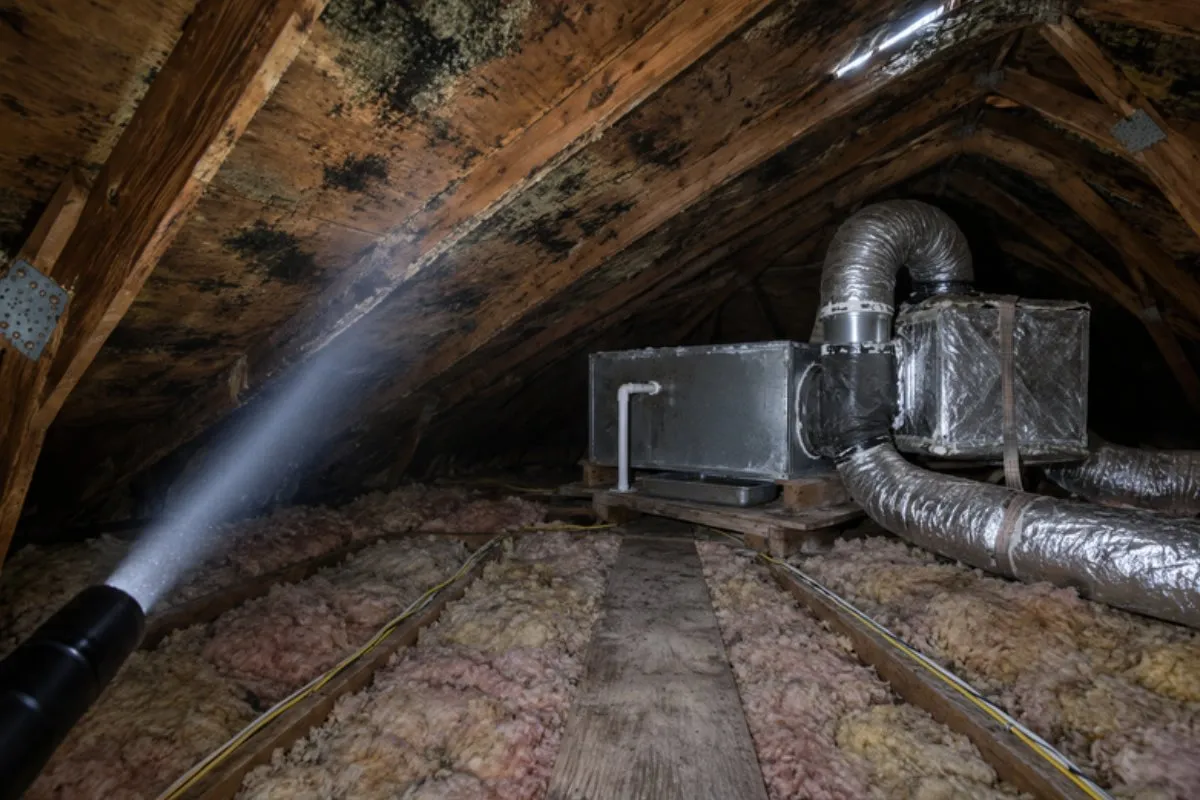
Most people discover attic mold by accident, while changing a filter or fetching decorations. Look for dark or fuzzy patches on the roof decking or rafters, insulation that is matted or discolored, and a musty smell when the hatch opens. A brown ceiling stain below is another reason to climb up and look.
Roof leaks that go unnoticed
Worn shingles or tile underlayment, cracked flashing and lifted sealant let rain in during summer storms. The water soaks the decking and insulation and may only show as a faint ceiling mark. Leaks near vents and chimneys are especially easy to miss from the ground.
Coastal homes see stronger winds that can lift roofing and drive rain into soffits, so storm season is when hidden attic moisture most often begins.
Roof work and insurance
If a roof leak caused the damage, an insurer may want the repair documented before or alongside the mold claim. Keep photos of the attic and receipts from the roofer. A company that understands that paperwork can make claims smoother, though coverage decisions are always up to your carrier.
What removal can include
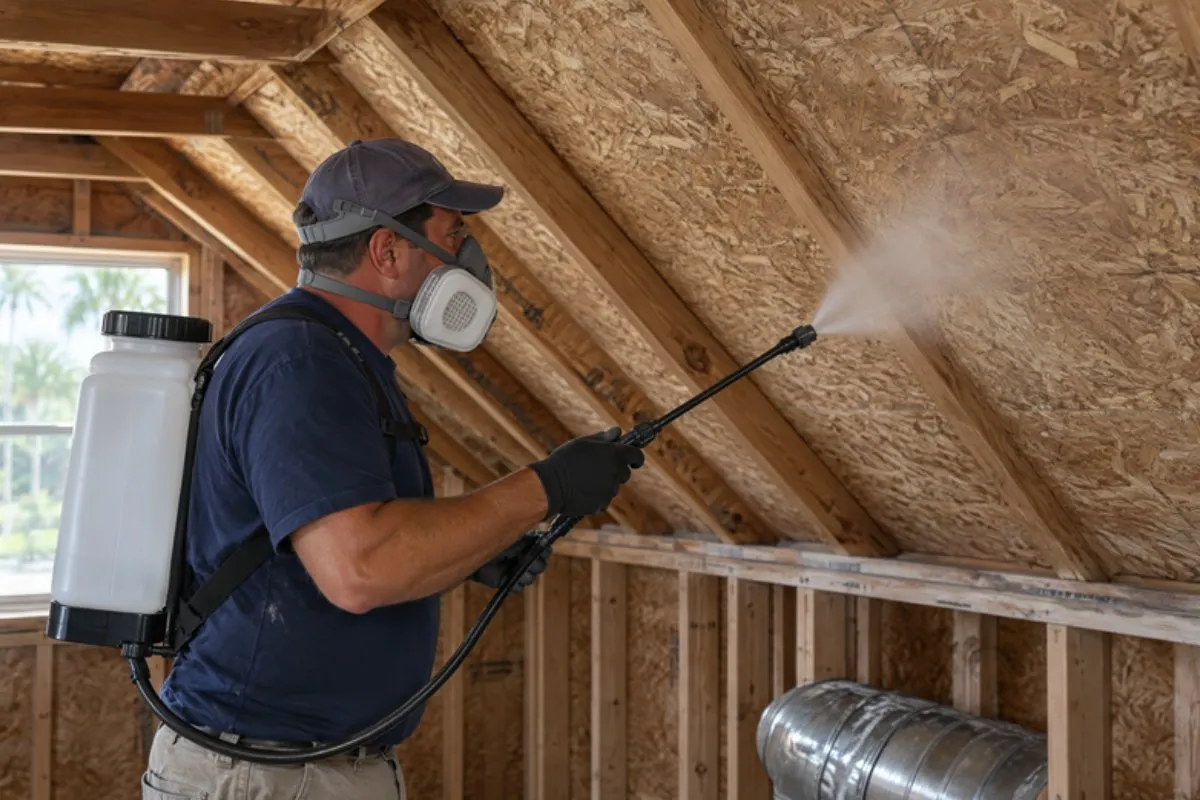
Depending on the findings, work may include bagging and removing damp insulation, cleaning wood with HEPA vacuuming and abrasive methods, and cutting out decking that is soft or deeply stained. Porous material that stays moldy usually has to come out, according to EPA guidance.
Check the attic after every big storm
A quick look from the hatch after heavy rain or high wind can catch a leak while it is small. Look for drips, dark wet spots on the decking and damp insulation. If the house had a power outage, add a check for stale air or a musty smell.
Useful local contacts for Lantana
Florida requires mold assessors and mold remediators to hold a state license through the Department of Business and Professional Regulation (DBPR). Ask for the license number and look it up before anyone starts.
Expect two separate companies if you want both an assessment and remediation: state rules keep the assessor and the remediator apart on the same structure for 12 months.
the Lantana Building Department handles building permits here, so that's the place to check before walls, cabinets or flooring go back in.
Palm Beach County Planning, Zoning & Building offers flood zone details, worth checking if storm water or surge is part of the story.
Nearby, the same kind of help is available in Lake Worth Beach, Hypoluxo and Atlantis.
Attic Mold Removal questions in Lantana
Will a new roof stop attic mold?
Why does my ceiling have a stain when it has not rained?
Do soffit vents matter for mold?
Do I need a permit for attic work?
More mold services in Lantana
Attic Mold Removal nearby
Helpful guides
Sources
Last updated: