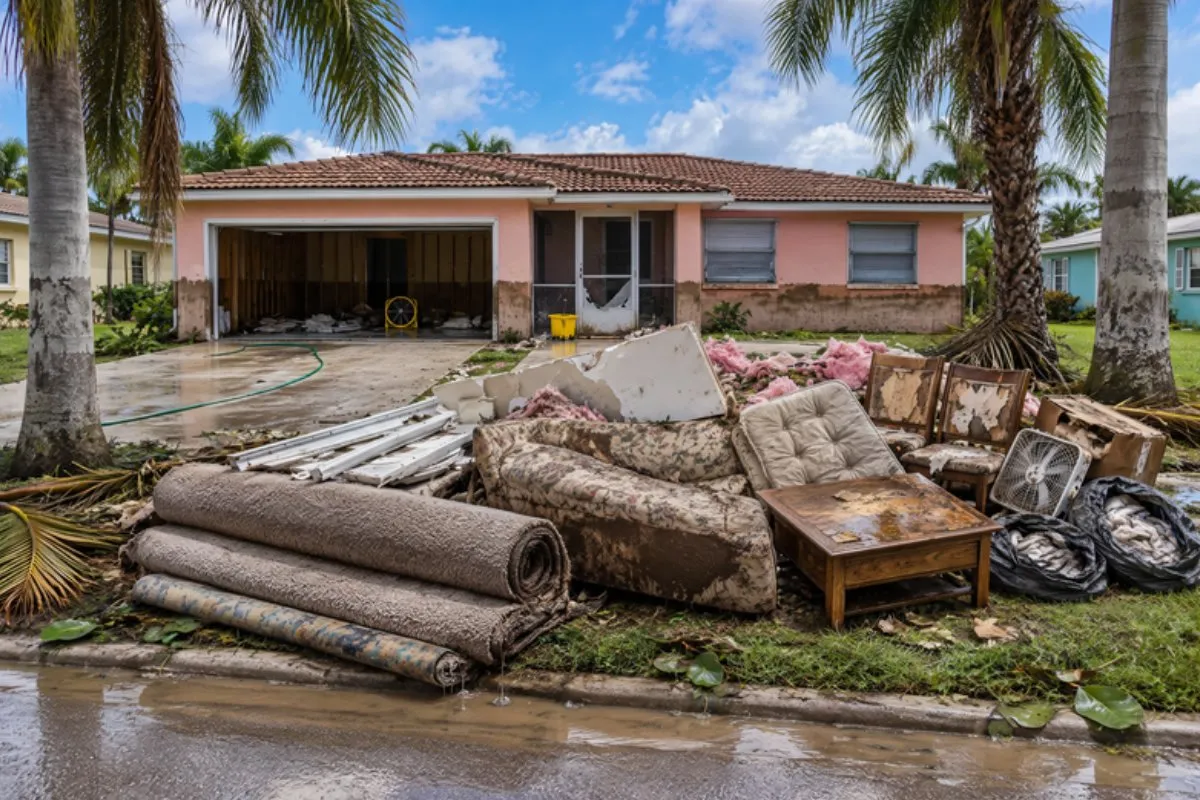
If water entered the house from a storm, a roof breach or a flooded canal, check walls, cabinets and flooring even where it looks dry. Hidden moisture is what lets growth spread behind the surface. Call the number on this page to be connected with a local mold company in Palm Beach.
Hidden growth behind a dried-out wall
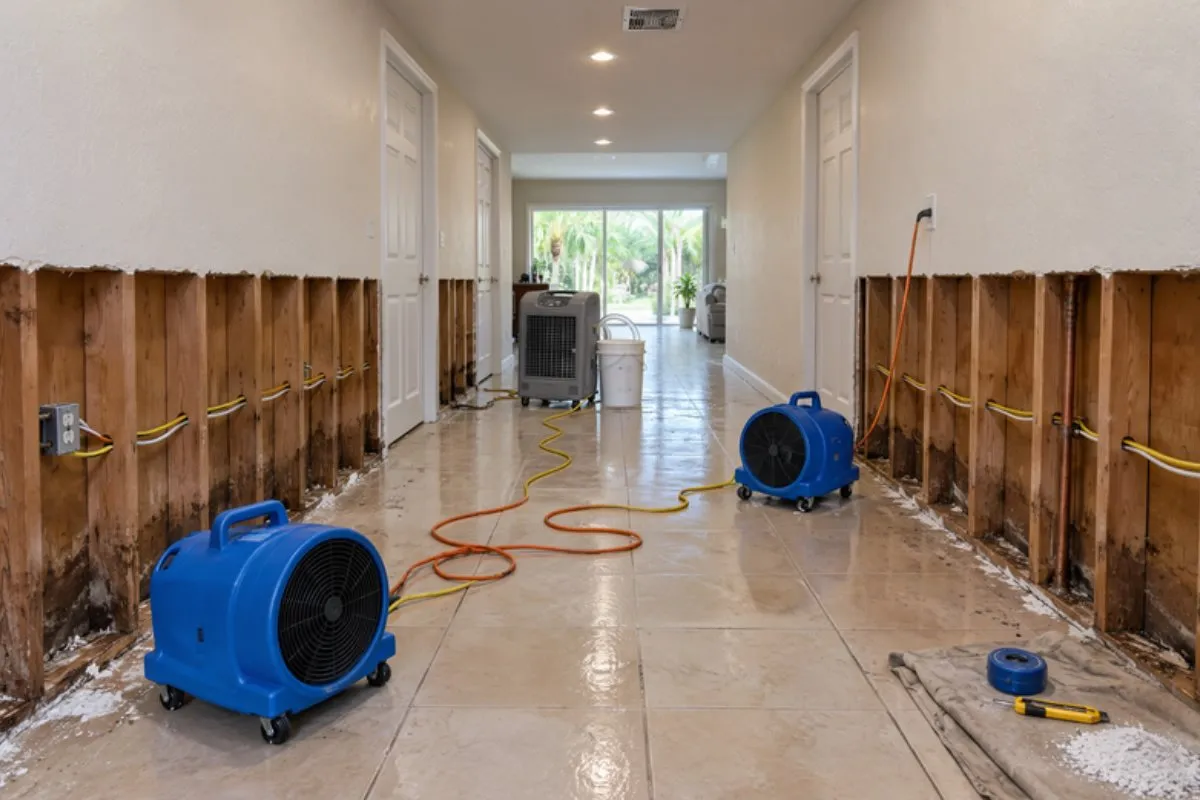
A wall can look fine on the surface while the cavity behind it stays wet. Water wicks upward through drywall and insulation, so growth often starts well above the visible waterline. A moisture reading and a look inside the wall tell you more than the paint does. Rooms that smell damp but look clean deserve the same attention.
Roof breaches and wind-driven rain
Not every storm claim involves rising water. Lifted shingles, cracked tile and failed flashing let rain into attics and down through ceilings. Insulation soaks up water like a sponge, and the wet travels down wall cavities long after the sky clears.
Coastal homes around Palm Beach often take wind-driven rain through sliding doors and window seals, and salt in surge water makes thorough cleaning and drying more important.
Before work starts in Palm Beach
State law treats mold assessment and mold remediation as separate license types issued by DBPR. A quick license lookup is worth doing before you sign anything.
Florida also bars a company that assessed a structure from remediating it within 12 months, and the reverse, so the inspection and the cleanup usually come from two different businesses.
If the job grows into replacing drywall, cabinets or framing, ask whether the rebuild needs a permit from the Town of Palm Beach Building Department.
For flood zone questions, FEMA's flood map service and your insurance agent can confirm the mapped zone for an address.
Calls from Palm Beach are often matched with companies that also cover Lake Worth Beach, South Palm Beach and Lake Clarke Shores.
Factors that change the price
- Depth and area of the affected walls and floors
- Whether the water was clean or contaminated
- How much drywall, insulation and flooring must be removed
- Number of days drying equipment stays in place
- Access to attics and tight rooms
Drying equipment and what it does
Expect air movers, dehumidifiers and possibly open wall cavities. The goal is to bring materials down to dry readings, not just to feel dry to the hand. The equipment usually runs for several days, and the company should check readings along the way and tell you when drying is truly done.
The first 48 hours
EPA advises drying wet materials within 24 to 48 hours. Remove standing water, pull wet carpet and pad, open windows if the weather allows, and run dehumidifiers and fans where power is on. Document everything first, then keep air moving until a local company can assess the rest.
Hurricane & Flood Mold Removal questions in Palm Beach
What photos do I need for insurance?
Is mold after a roof leak handled the same way as flood mold?
Who handles mold in a flooded condo?
Is a flooded garage a mold risk?
More mold services in Palm Beach
Hurricane & Flood Mold Removal nearby
Helpful guides
Sources
Last updated: