Flood mold removal means getting the structure dry, cutting out materials that cannot be saved and cleaning what is left. The sooner the drying starts, the less has to come out. Call the number on this page to be connected with a local mold company in Stuart.
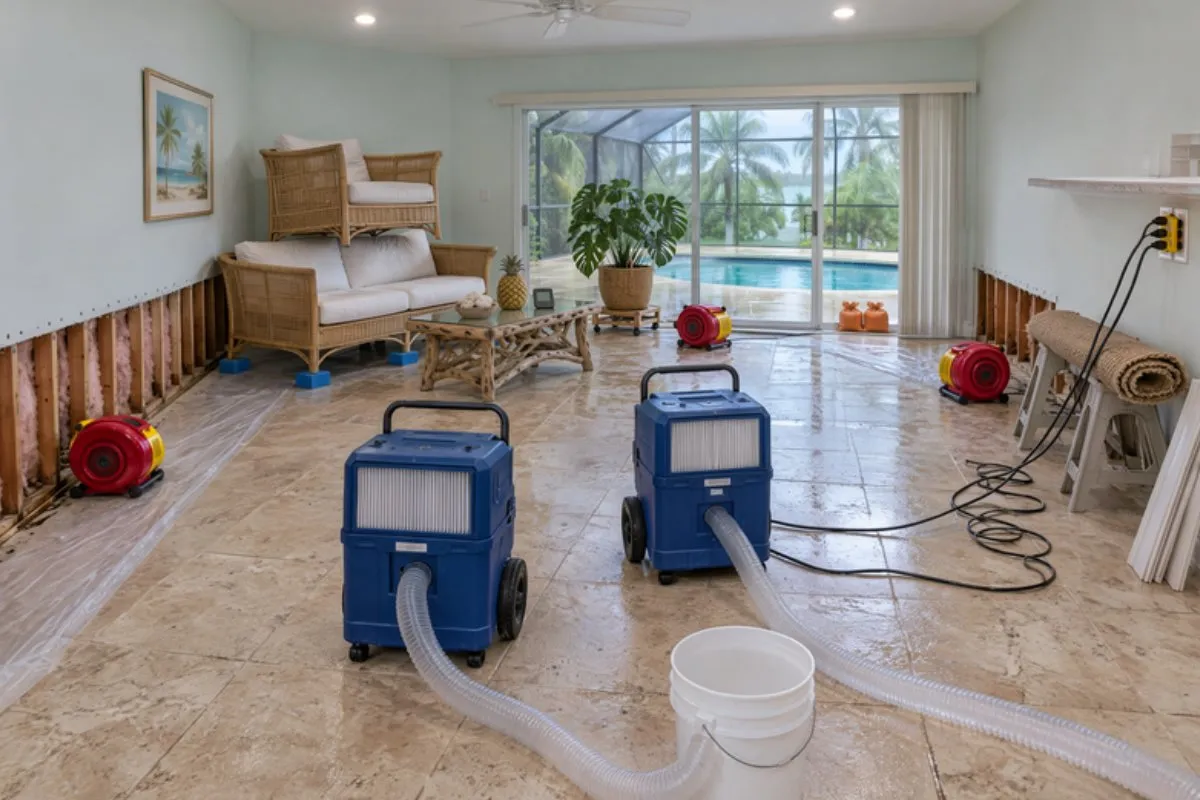
What to check once the water is gone
- A musty odor in rooms that were wet
- Dark or fuzzy patches on lower walls, trim or cabinet backs
- Warped baseboards and swollen doors
- Carpet pad or insulation that never fully dried
Any of these after flooding is a reason to call before the damage spreads upward.
Where the water comes from
Each source tends to leave a different pattern.
| Source | Usual result |
|---|---|
| Storm surge | Wet lower walls, flooring, cabinet bases |
| Roof or window breach | Wet ceilings, attic insulation, wall cavities |
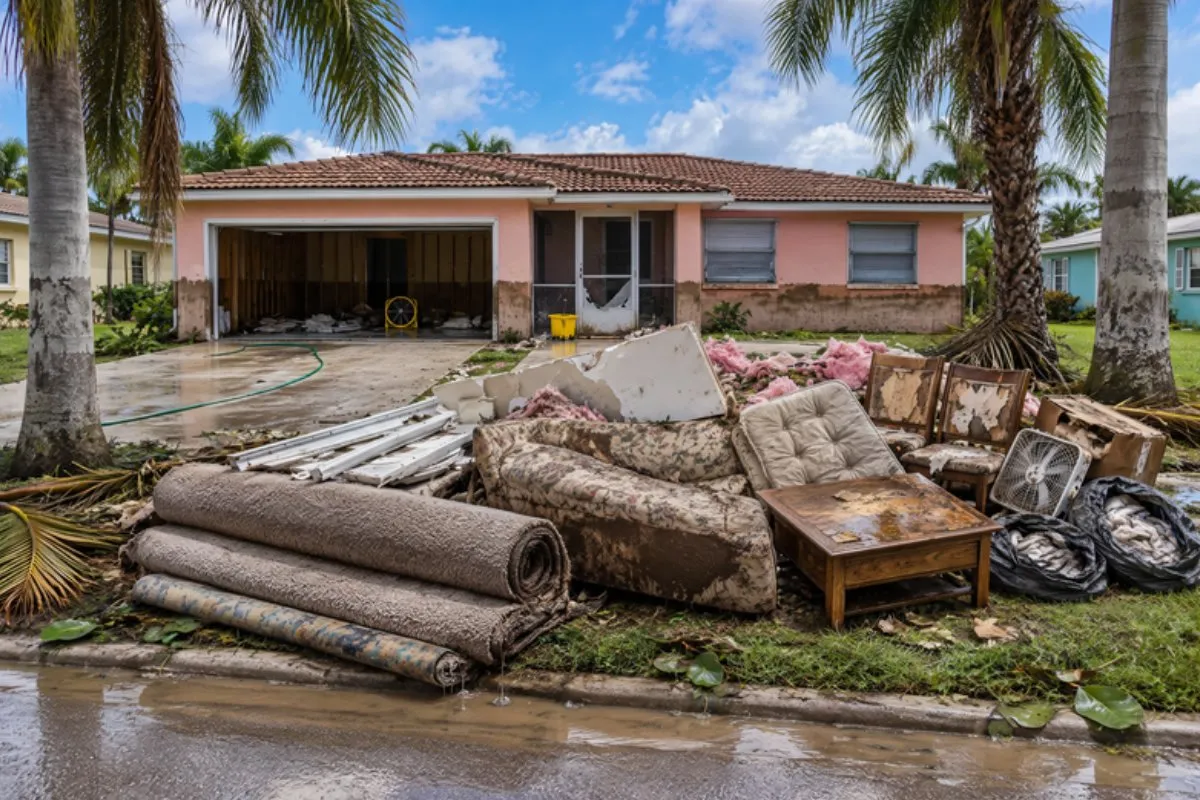
| Canal or lake overflow | Silt and standing water in garages |
| Backed-up drains | Wet flooring in low rooms |
Because many Stuart houses were built in the 1970s, expect older drywall, original insulation and wood additions, all of which tend to take longer to dry after water gets in.
Coastal homes around Stuart often take wind-driven rain through sliding doors and window seals, and salt in surge water makes thorough cleaning and drying more important.
How insurance can fit in
Policies treat wind-driven rain, roof damage and rising water differently, and flood coverage is often a separate policy. Ask your insurer what it covers and what documentation it wants before work starts. The company can describe the scope in writing, but it cannot decide coverage.
Permits, flood maps and licenses in Stuart
State law treats mold assessment and mold remediation as separate license types issued by DBPR. A quick license lookup is worth doing before you sign anything.
Expect two separate companies if you want both an assessment and remediation: state rules keep the assessor and the remediator apart on the same structure for 12 months.
If the job grows into replacing drywall, cabinets or framing, ask whether the rebuild needs a permit from the Stuart Building Division.
To see whether a property sits in a mapped flood zone, start with the Martin County Building Department.
Nearby, the same kind of help is available in Jupiter, Port Salerno and Jupiter Farms.
After the work, ask for proof it is dry
Finishing demolition is not the end. Ask for final moisture readings showing that framing and slab are dry before anyone closes up a wall. If you want independent confirmation, a clearance check by a separate assessor can be arranged. Closing up damp walls is how problems return.
When to stop and call a pro
If the affected area is bigger than about 10 square feet, if water came from outside or from drains, or if growth is inside walls, bring in a company. Floodwater jobs rarely fit the small-patch DIY guidance. Fix the moisture source first, since cleaning without drying buys only a few weeks.
Stuart at a glance
Calls come in from across Stuart, including around Downtown Stuart, Hutchinson Island, Mariner Village.
Median year built is 1979 for houses and condos; renters are 41% of households.
Hurricane & Flood Mold Removal questions in Stuart
Should I throw out everything that got wet?
Is a flooded garage a mold risk?
What should I do about health concerns after a flood?
Where can I check flood zone information for my address?
More mold services in Stuart
Hurricane & Flood Mold Removal nearby
Helpful guides
Sources
Last updated: